CONECTA-TCU
Integrating the TCU, Public Administration,
and the citizen
The user experience in the CONECTA-TCU system
context
According to the CNJ, in 2018 there were over 80 million lawsuits in progress throughout Brazil. Some of these processes are the result of irregularities and are of interest to the Federal Court of Accounts (TCU) which, after being judged, generate rulings (decisions) and, in turn, generate determinations and recommendations that must be fulfilled by direct and/or indirect public administration bodies. To move processes forward, public agencies need to communicate, sending and receiving information.
scenario
Today, almost all communication between the TCU and public agencies is intermediated by the Post Office (sending and receiving), which generates high public spending, little transparency, and significant slowness in the process, especially regarding the acknowledgment and monitoring of determinations. Below are the details:
-
The time for acknowledgment of a determination, from the TCU's issuance to the agency's response, is, on average, 15 days;
-
Information on processes, rulings, and determinations is not centralized, requiring access to various systems to complete tasks, which causes slowness and lack of transparency, in addition to availability not being immediate;
-
Contracts between the TCU and the Post Office cost in the millions of reais.
the challenge
Given this scenario, our challenge was:
"How can we promote transparency and more assertive and faster communication with other agencies?"
expected results
To meet the challenge, it will be important to achieve the following results:
-
Facilitate the consultation and visualization of information regarding processes, rulings, and determinations issued by the TCU to public administration bodies;
-
Decrease the time and costs for sending and receiving communications between the TCU and public agencies;
-
Reduce the bureaucracy involved;
-
Have more transparency in the stages and in access to documents.
my role
In this project, I helped think through the UX strategy from start to finish and provided support in system development alongside the developer team, requirements, and the PO. I facilitated processes and workshops for creating new features, conducted research, suggested metrics, and designed better usage experiences and system interfaces.
the process
The UX process for Conecta TCU was structured to ensure clarity, alignment, and continuous product evolution. It starts with discovery, where we understand the problem and the real needs of users. Then, we move on to definition, ideation, prototyping, and validation, iterating whenever necessary. From these stages, development occurs in release cycles, ensuring constant deliveries and progressive improvements.
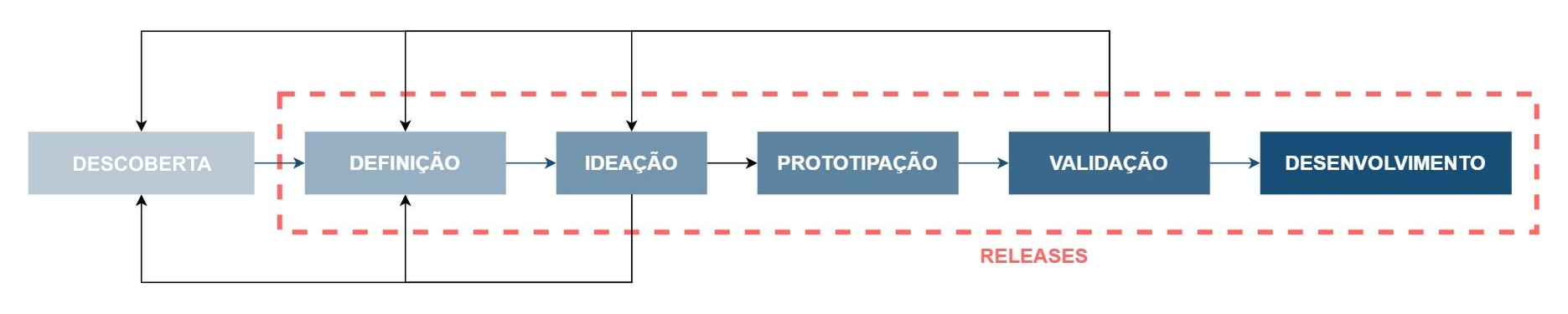
The UX Design process
1. Discovery
Interviews
To understand the flow of sending and receiving determinations, exploratory interviews were conducted with the POs of the CONECTA-TCU system, using closed and open questions. From this information, we were able to summarize the process as follows:
-
The TCU sends an official letter via Post Office to the public administration body communicating that a determination must be fulfilled;
-
The determination arrives at the agency, is usually received by the protocol department, forwarded to the responsible area, and a receipt notice is sent to the TCU;
-
The responsible area within the agency may request more time or respond to the determination. In both cases, an official letter is sent back to the TCU via Post Office, and the communication response can take 30 to 90 days to be sent and may contain a large number of printed pages;
-
The TCU analyzes the response, which may be returned to the agency for rectification or marked as concluded and, finally, archived.
It is important to emphasize that, throughout this entire process, the determination is monitored.
Personas
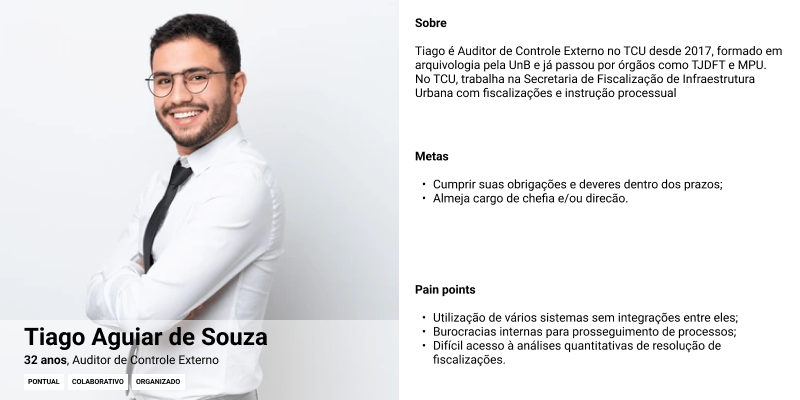
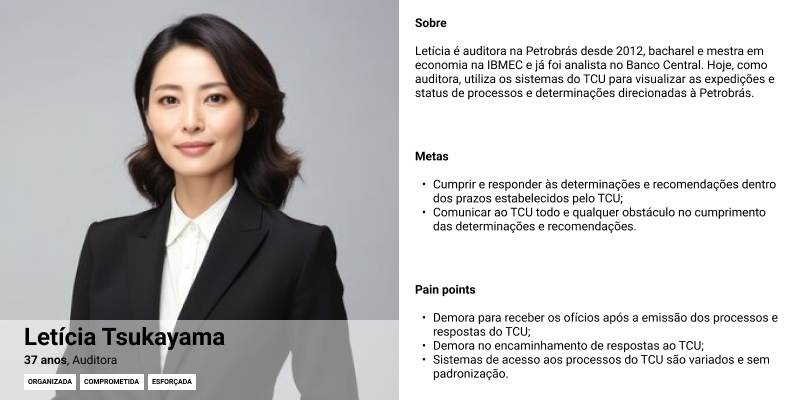
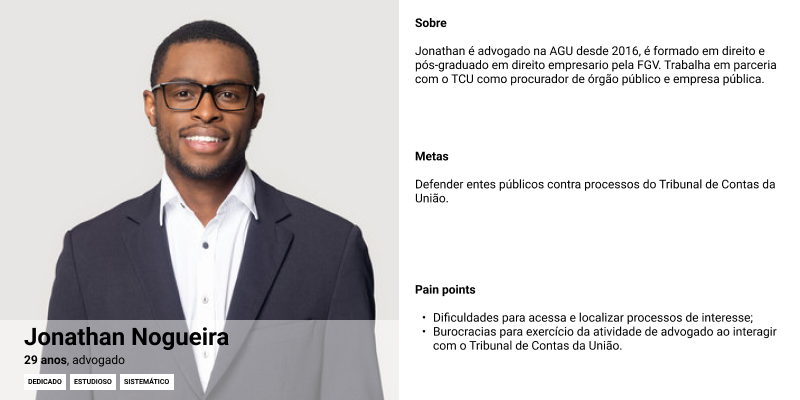
There are three user profiles for CONECTA-TCU: external control auditors from the TCU, auditors from public agencies and companies, and lawyers and legal representatives from the AGU (Attorney General of the Union). To help the team better focus on the needs of these users, we created personas with these profiles.
2. Definition
Product Backlog Building
Requirements gathering was done using Product Backlog Building together with the PO and internal stakeholders (TCU), resulting in various features that were organized and prioritized into 6 releases.
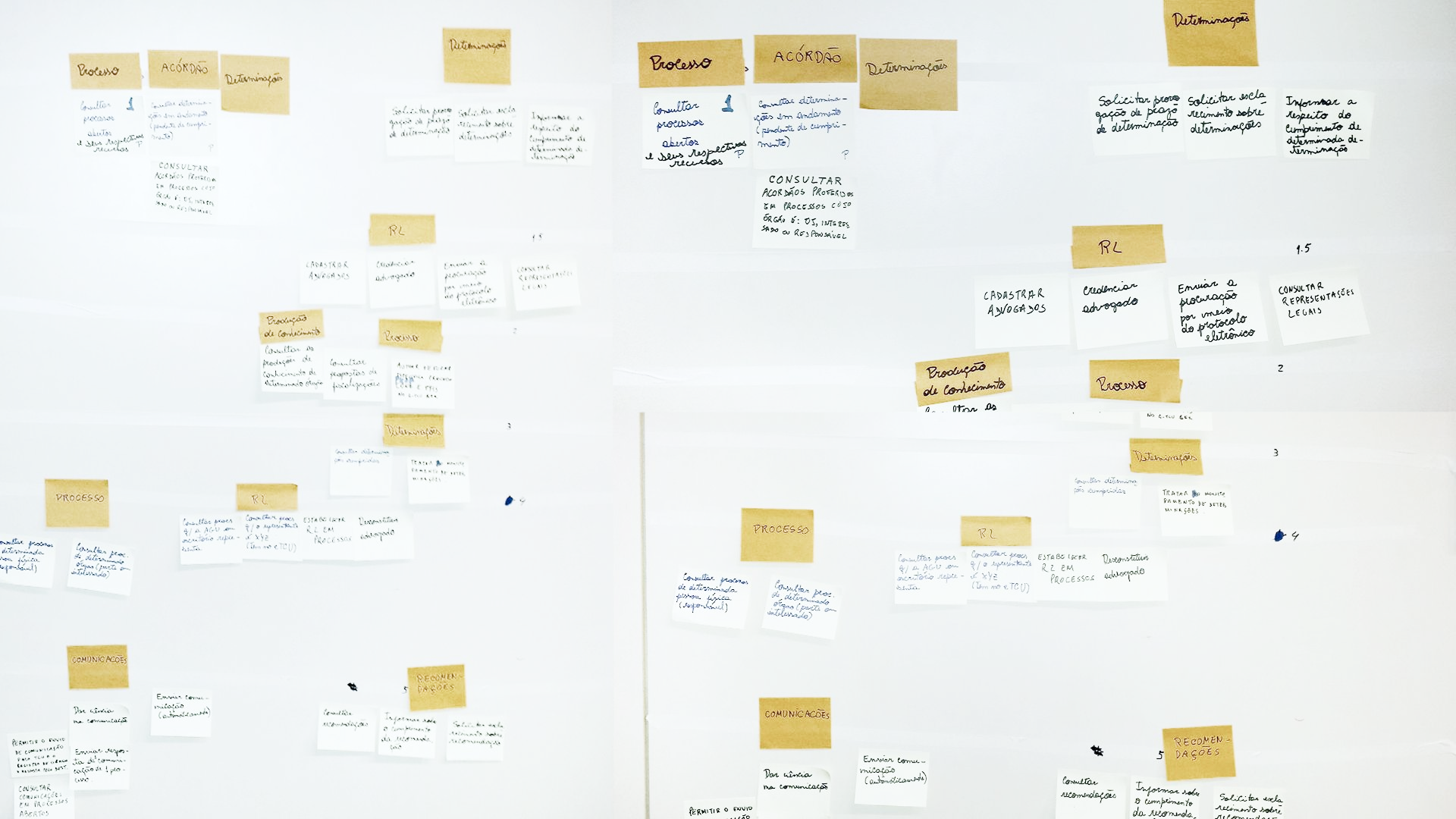
Creation of Product Backlog Building for requirements gathering
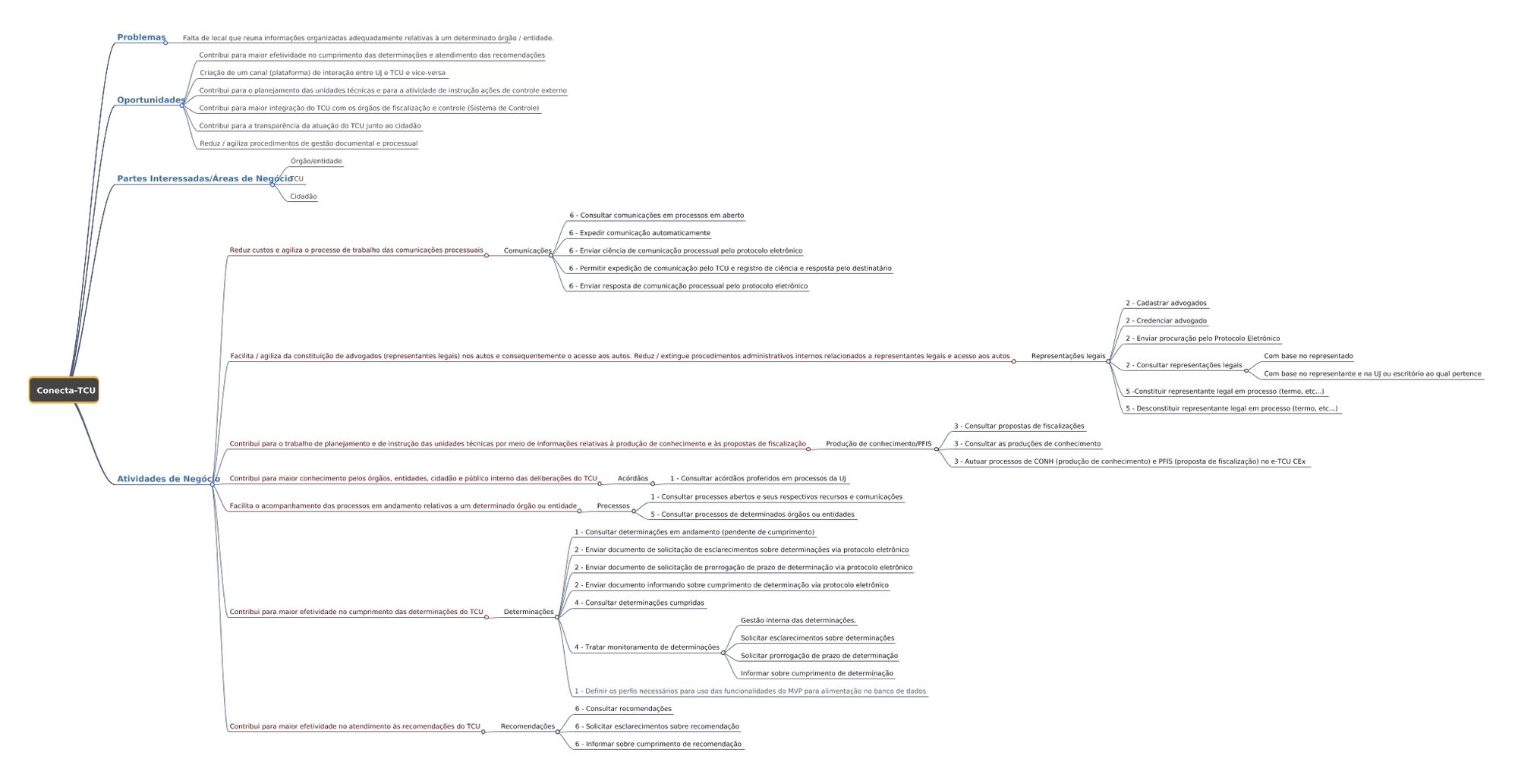
PBB Mind Map
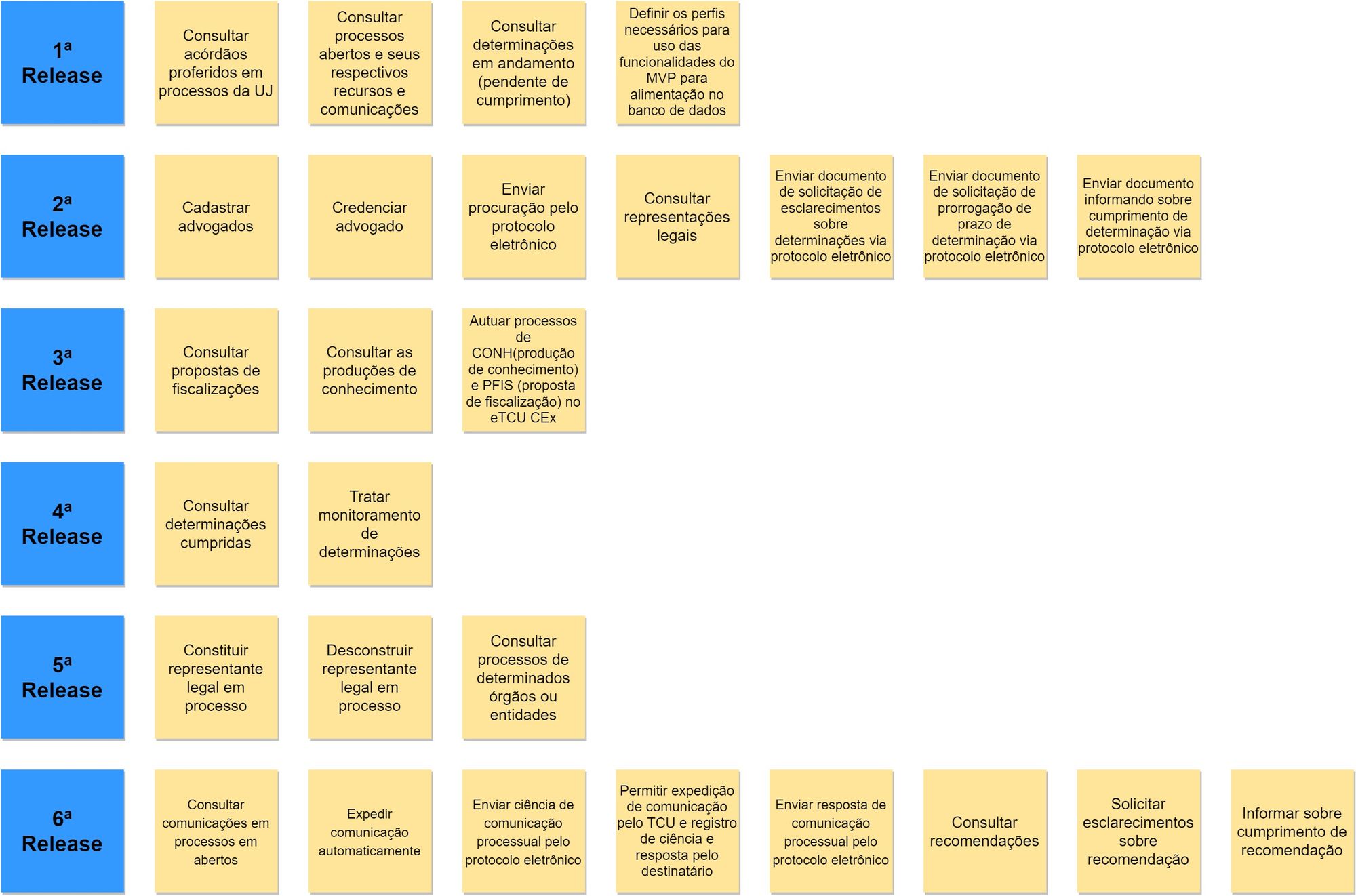
Requirements prioritization
Design Sprint
We ran a Design Sprint focused on the external audience, that is, with auditors and public servants from other agencies to better understand their needs regarding access to processes, rulings, and determinations. For more details on the Sprint, here are the documents for consultation:
3. Ideation
Task Flow
We created task flows for each of the three basic profiles of the CONECTA-TCU system:
-
Profile for consulting rulings, processes, or determinations;
-
Communications operator profile;
-
Lawyer or legal representative profile.
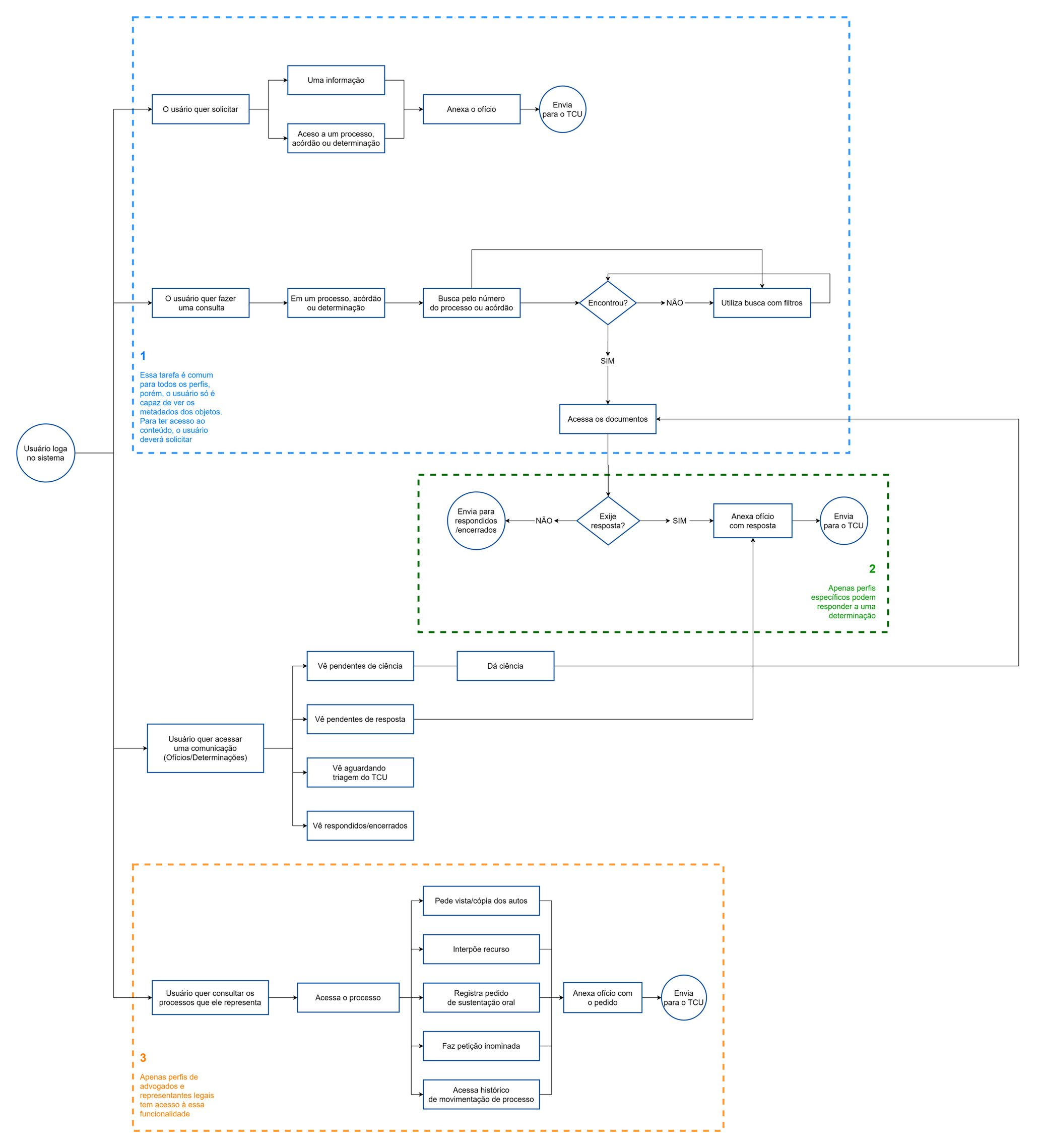
Task flow
Information Architecture
In addition to the task flow, we structured and organized the system sections, divided among the three main profiles.
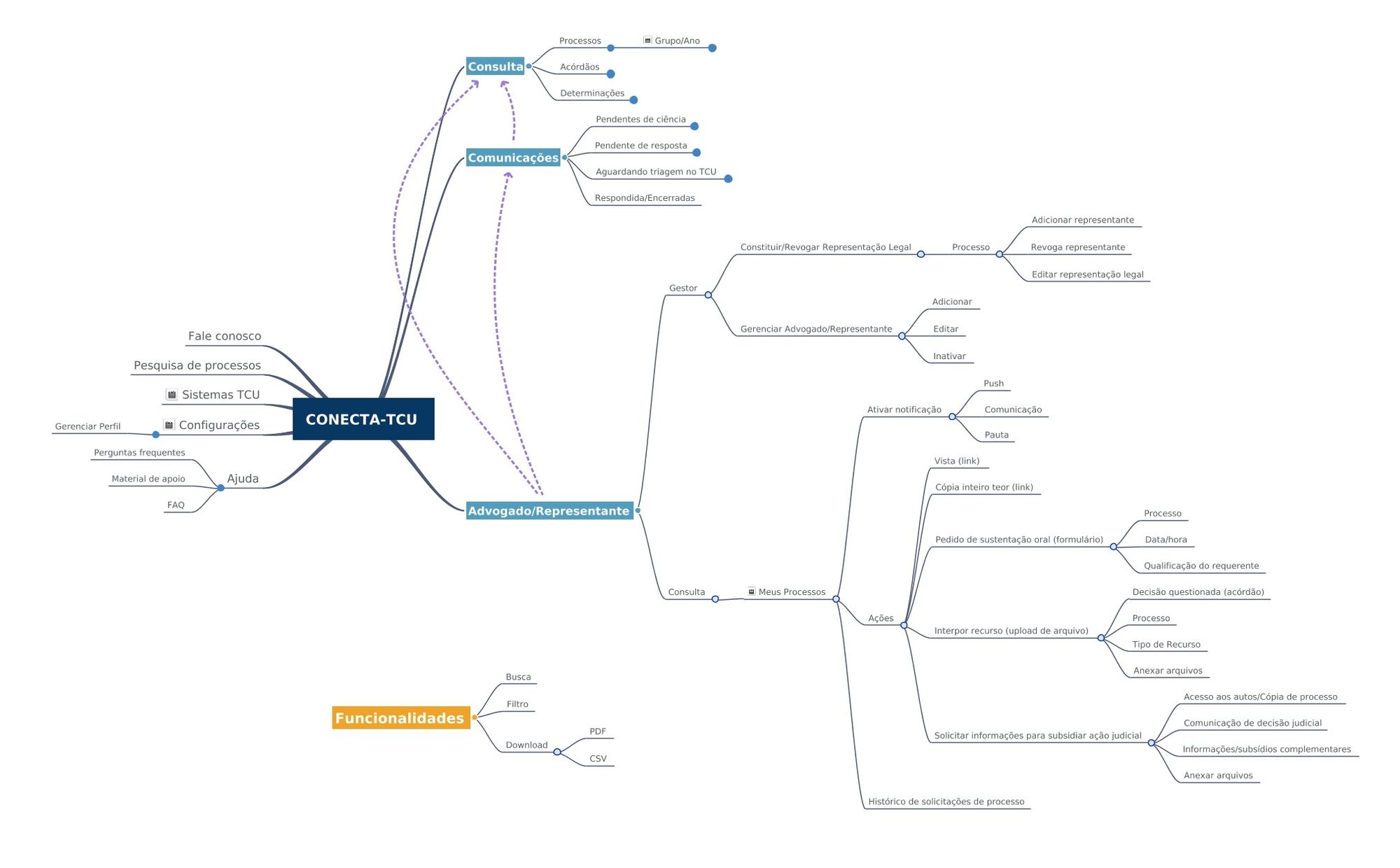
Information architecture of the CONECTA-TCU system
4. Prototyping
Based on the prototype built in the Design Sprint and the established problems and challenges, we sketched some home screen options based on dashboard interfaces to optimize the experience for each user profile. During the redesign process, the current interface cards were improved, both visually and in terms of functionality, for example, the availability of individual or batch operations.
Design Sprint Prototype Screens
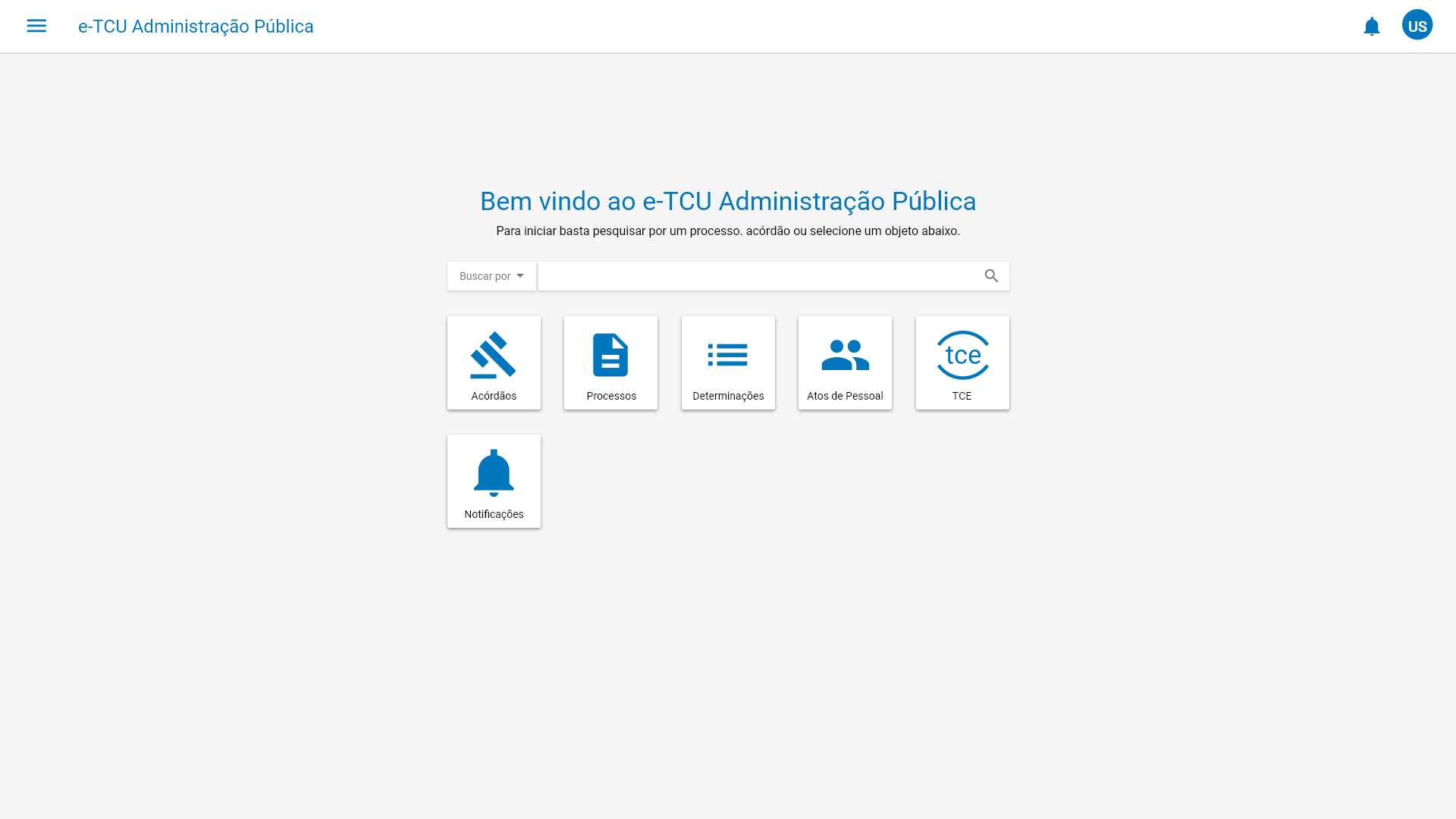
Home page
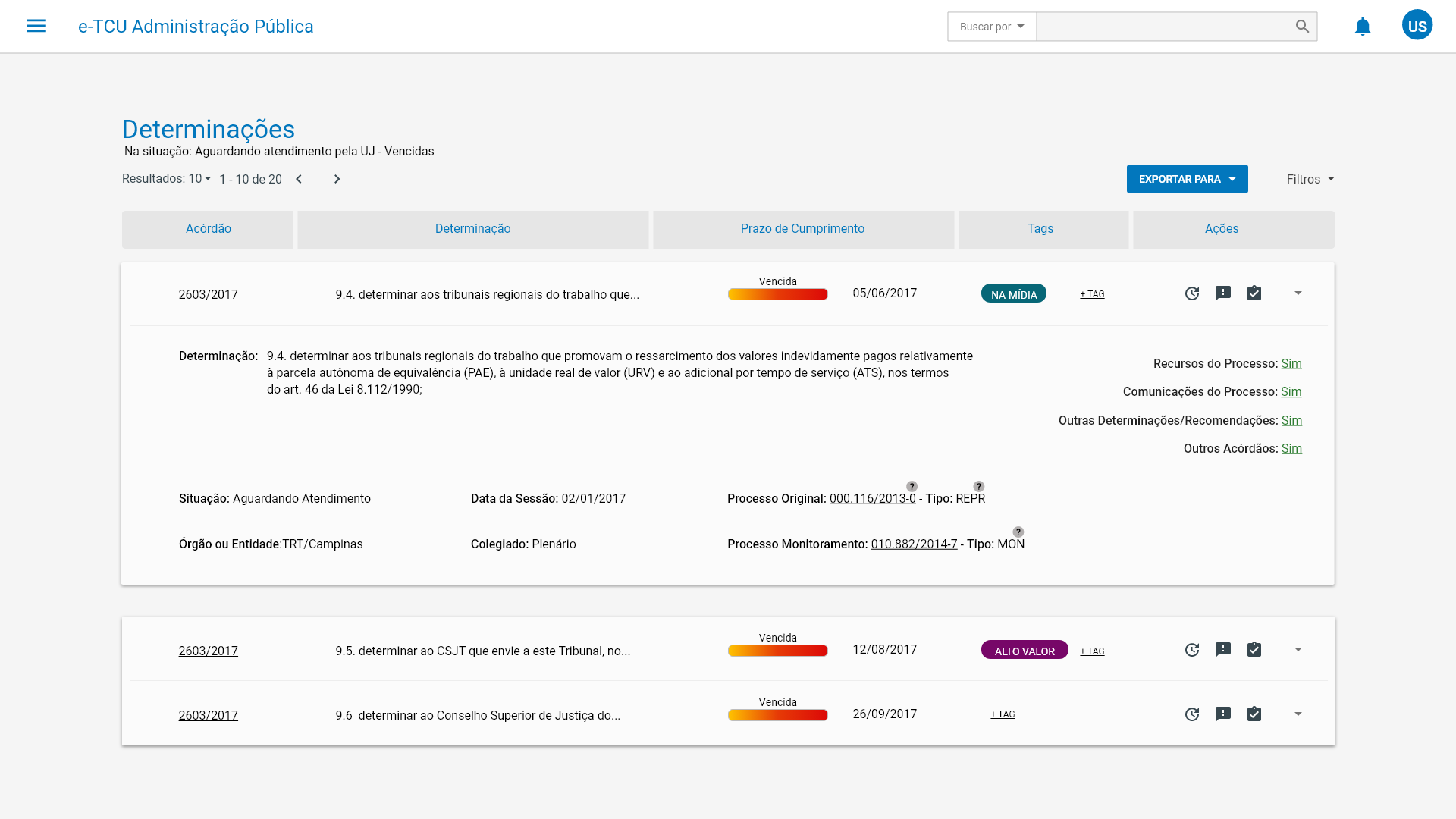
Process and operation cards
Low-Fidelity Prototype
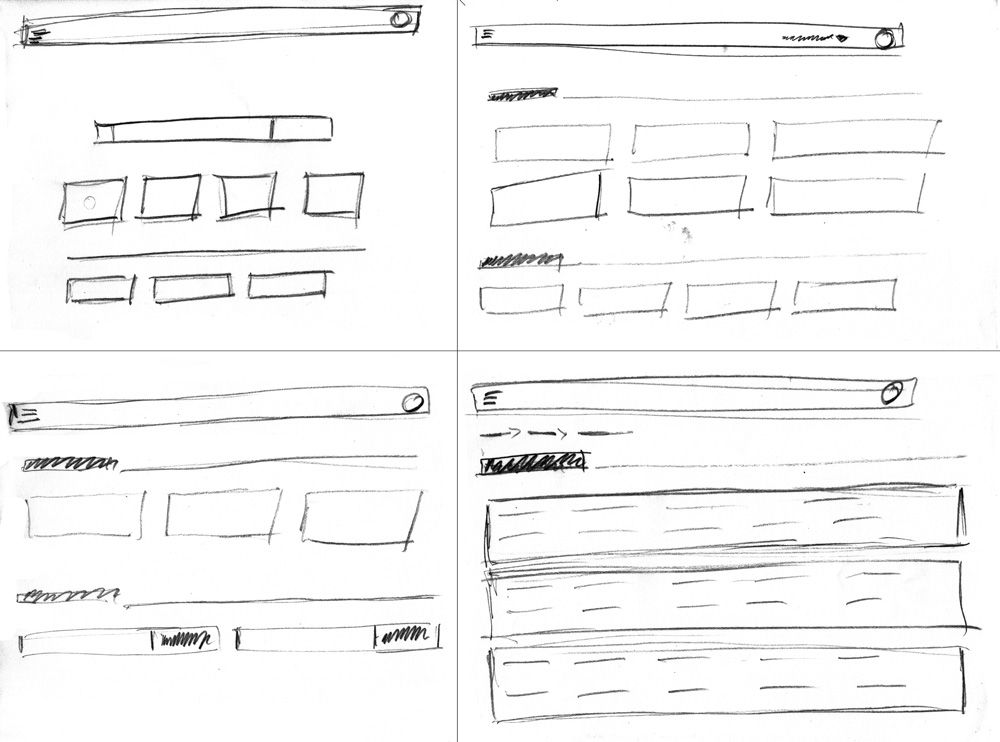
Home page, blocks, and cards
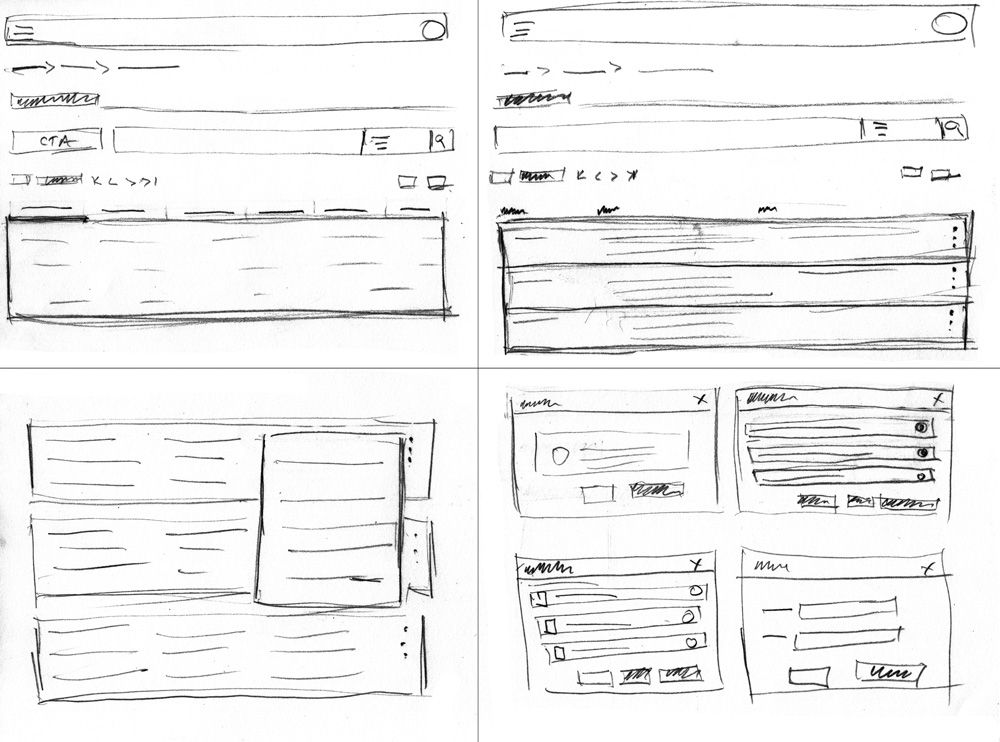
Tabs, cards, operations, and file upload
High-Fidelity Prototype
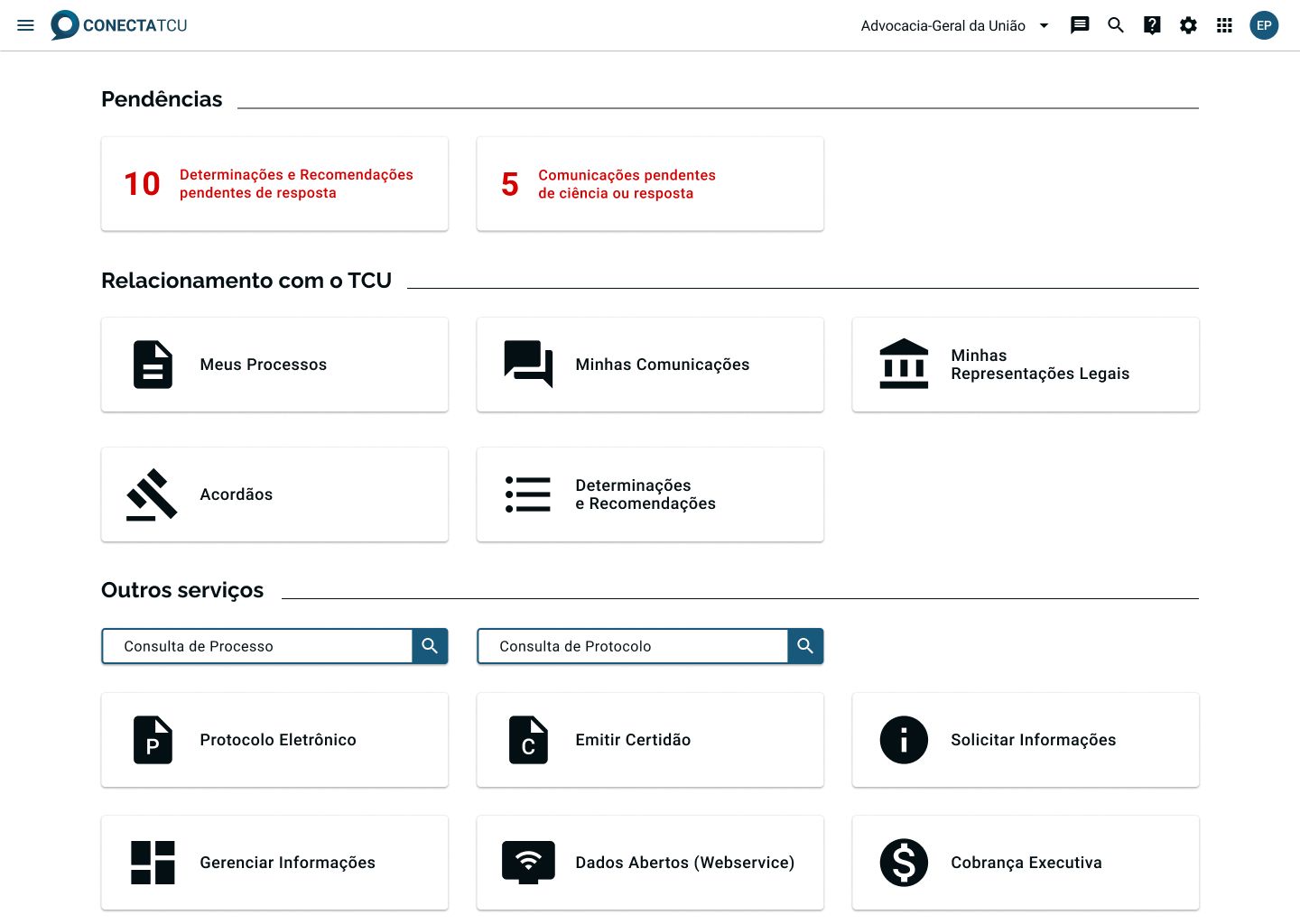
Modular home page
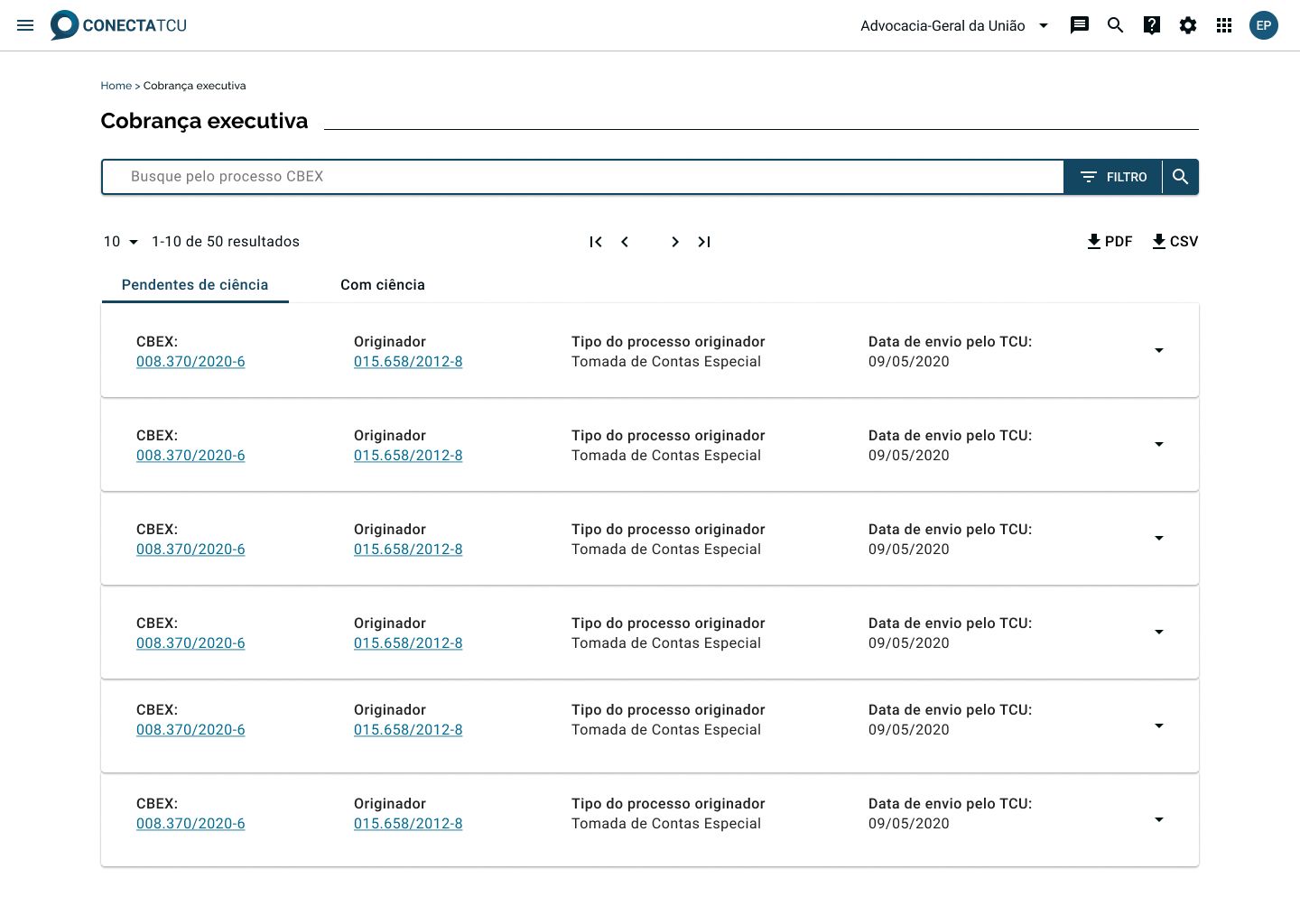
Process cards without operations
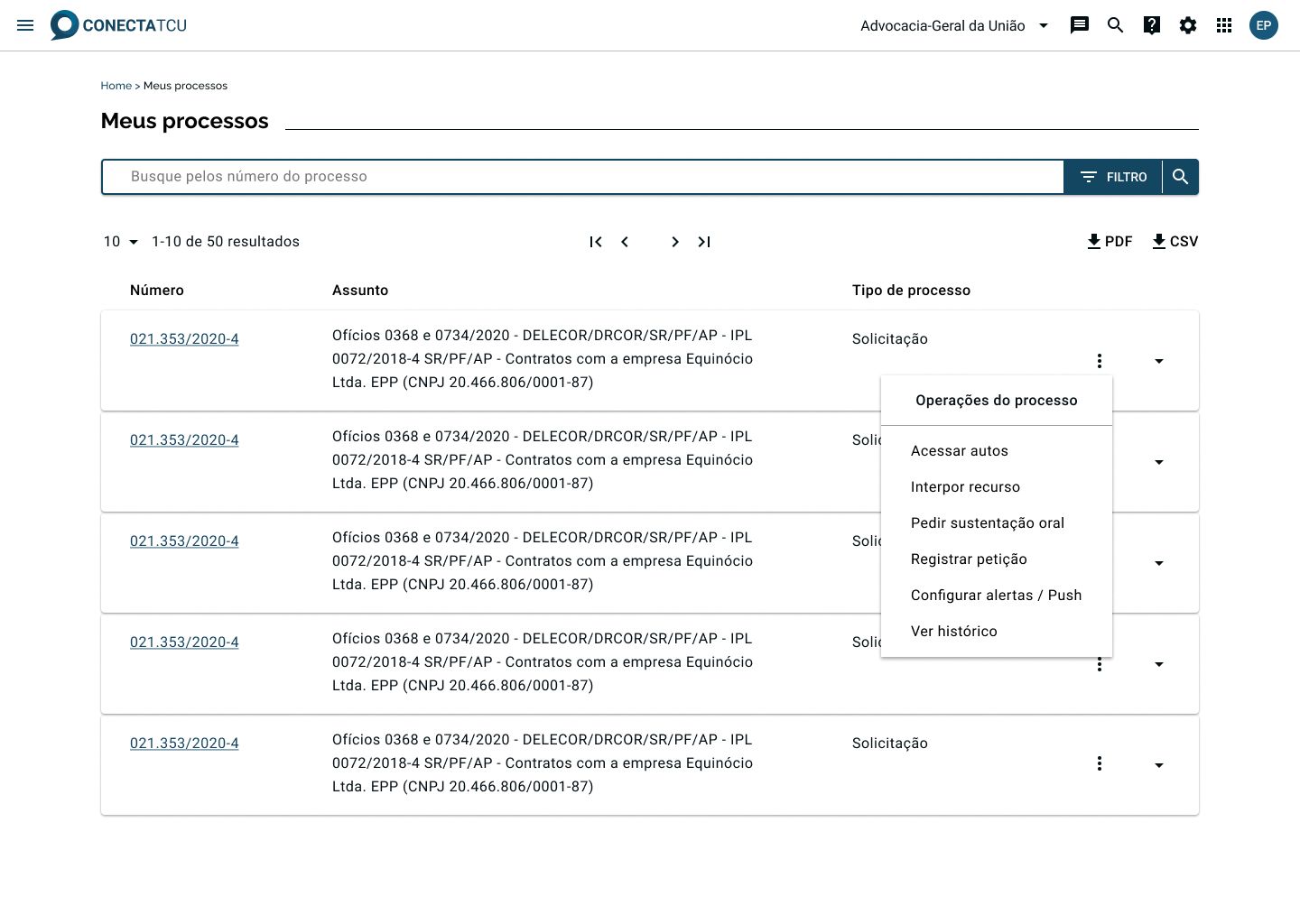
Process cards with operations
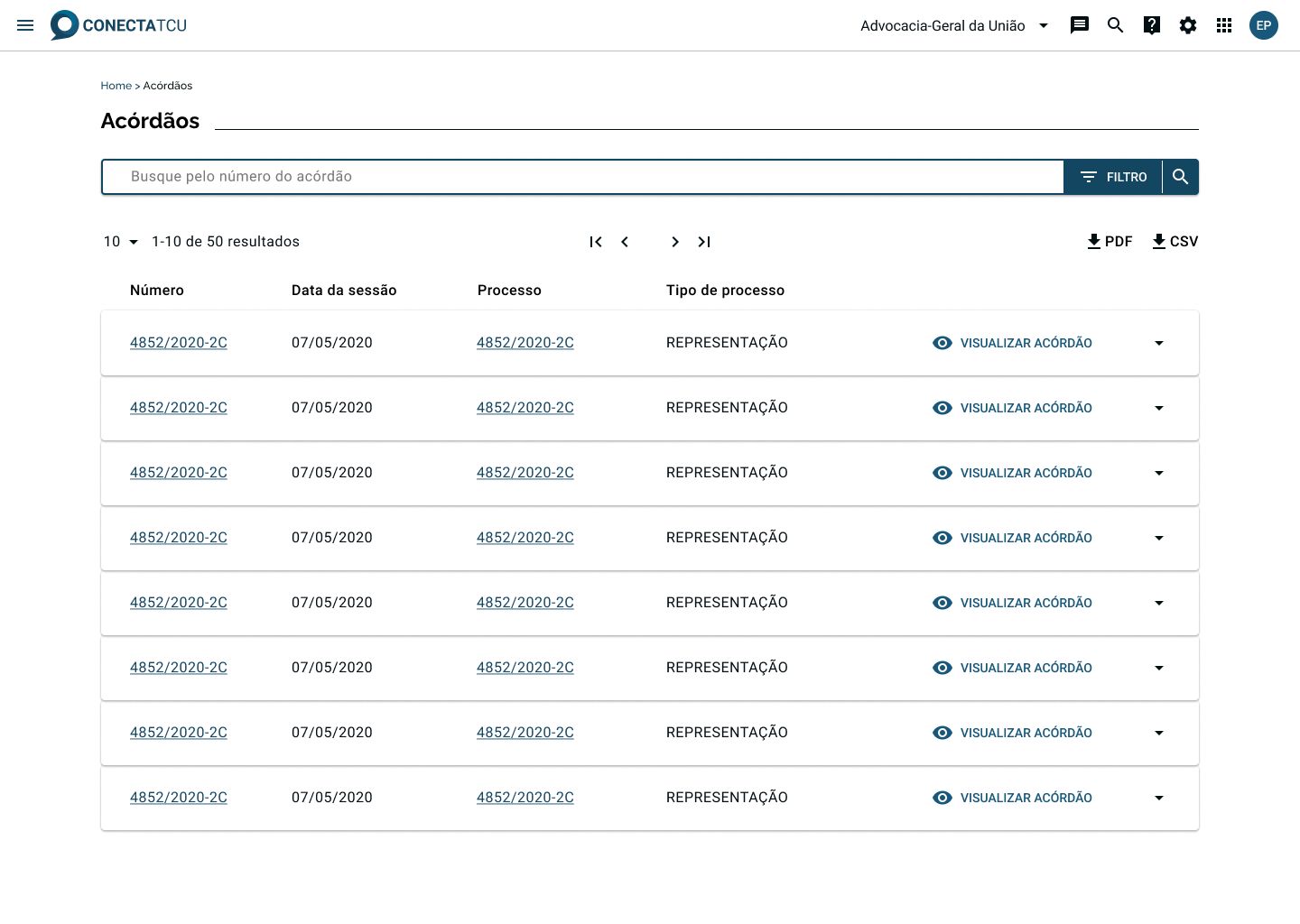
Ruling cards
5. Metrics
One of the main challenges in systems like this is choosing KPIs that well represent quantitative results, such as conversion, engagement, and task success, and qualitative ones, such as expectations, performance, and usability, allowing platform performance measurement. Thus, we defined:
-
Value and objective: Increase the transparency of internal processes, speed up compliance with determinations, and reduce costs;
-
Goals: Reduce the days for acknowledgment from 15 to 5, decrease support tickets by 50%, reduce the time to fulfill determinations from 180 days to 90 days, and decrease by 20% the amount paid to the Post Office for the delivery of determination processes;
-
Data collection frequency: create a tool that collects data daily;
-
Timeframe: have this data from 6 months to 1 year, depending on the features already implemented in the platform;
-
Presentation: reports and dashboards.
To map and record all this data, a system called TCU-GERENCIAL was developed, which will store and present statistical data on the usage of the CONECTA-TCU system.
Usability Analysis
For usability analysis, we can use some scales to point out problems in our interface. Here, the SUS (System Usability Scale) was used because it presents a balance between scientific accuracy and shorter analysis time.
The SUS has 3 main objectives: to evaluate the effectiveness, efficiency, and satisfaction of the interface. Thus, we defined 10 questions to be evaluated by users, ranging from 1 (strongly disagree) to 5 (strongly agree). They are:
-
I think that I would like to use this system frequently;
-
I found the system unnecessarily complex;
-
I thought the system was easy to use;
-
I think that I would need the support of a technical person to be able to use this system;
-
I found the various functions in this system were well integrated;
-
I thought there was too much inconsistency in this system;
-
I would imagine that most people would learn to use this system very quickly;
-
I found the system very cumbersome to use;
-
I felt very confident using the system;
-
I needed to learn a lot of things before I could get going with this system.
The usability analysis (SUS) was conducted in an online and moderated manner, where users had to complete some tasks. Thus, we had a total of 50 responses with an average of 82.5 points, which is a quite satisfactory score.
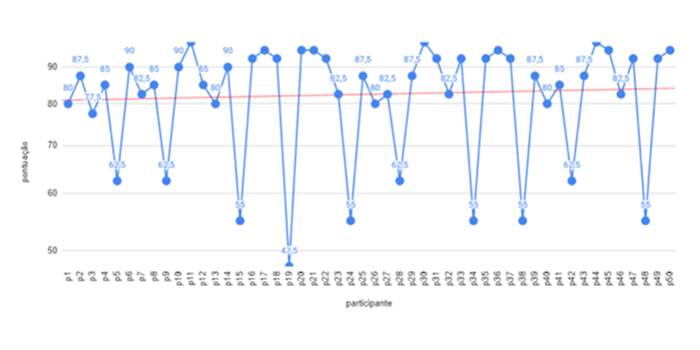
Graph of scores per participant and SUS average
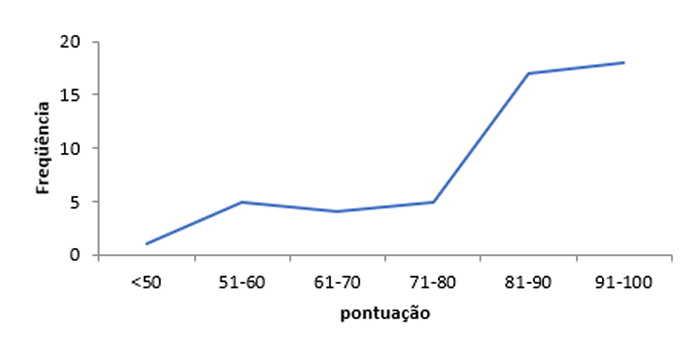
SUS score graph by frequency
6. Accessibility
Eliminating barriers on the web assumes that sites and portals are designed so that all people can understand, navigate, and interact effectively with pages and content on the internet, especially those with some type of limitation, be it intellectual, physical, or motor. For these reasons, designing accessible systems is a commitment for any and every system and application that the Federal Government develops for the use of its servants and citizens, and here at CONECTA-TCU, it was no different. Thus, to democratize access and digital inclusion, the accessibility guidelines used in our system were based on the Electronic Government Accessibility Model (eMAG), which consists of a set of recommendations to be considered so that the accessibility process of Brazilian government sites and portals is conducted in a standardized way and is easy to implement.
As there are many recommendations (approximately 50), we prioritized some for these first 6 deliveries of the CONECTA-TCU system, which are:
-
Recommendation 1.1 – Respect Web Standards;
-
Recommendation 1.2 – Organize HTML code logically and semantically;
-
Recommendation 1.3 – Correctly use heading levels;
-
Recommendation 1.4 – Order reading and tabulation logically and intuitively;
-
Recommendation 1.8 – Divide information areas;
-
Recommendation 2.1 - Make all page functions available via keyboard;
-
Recommendation 2.3 - Do not create pages with periodic automatic updates;
-
Recommendation 2.7 – Ensure user control over temporal content changes;
-
Recommendation 3.4 – Inform the user about their location on the page;
-
Recommendation 3.5 – Describe links clearly and succinctly;
-
Recommendation 3.6 – Provide text alternatives for site images;
-
Recommendation 3.11 – Ensure readability and comprehension of information;
-
Recommendation 3.12 – Provide an explanation for acronyms, abbreviations, and unusual words;
-
Recommendation 4.1 - Offer minimum contrast between background and foreground;
-
Recommendation 4.2 – Do not use only color or other sensory characteristics to differentiate elements;
-
Recommendation 6.2 – Associate labels with their fields;
-
Recommendation 6.3 – Establish a logical navigation order;
-
Recommendation 6.5 – Provide instructions for data entry;
-
Recommendation 6.6 – Identify and describe data entry errors and confirm information submission.
There are some recommendations that are already covered by the technology used itself, such as frameworks, language, etc., and therefore are not listed.
7. Results
We validated the Sprint prototype in a usability test with 5 users and achieved an excellent result. All participants were able to complete 100% of the tasks, with many compliments and important feedback on the features. However, for the first releases of the CONECTA-TCU system, we simplified some features and operations. One year after launch, the impact was considerable and, among the gains, we can highlight:
-
Consultations of processes, rulings, and determinations are immediate;
-
Communication acknowledgment time reduced from 15 days to 1.8 days;
-
More transparency: members of the Public Prosecutor's Office, delegates, AGU, and lawyers with full access to procedural records, without bureaucracy and automatically;
-
Approximation of jurisdictional units, lawyers, authorities, and other actors with the TCU;
-
Cost reduction, with direct delivery of information to the recipient, without intermediaries;
-
Resource optimization and activity rationalization;
-
With approximately 23 thousand external users of CONECTA-TCU, more than 6 thousand interact directly with it and nearly 17 thousand consume information from the system.
Below we can see some numbers from CONECTA-TCU:
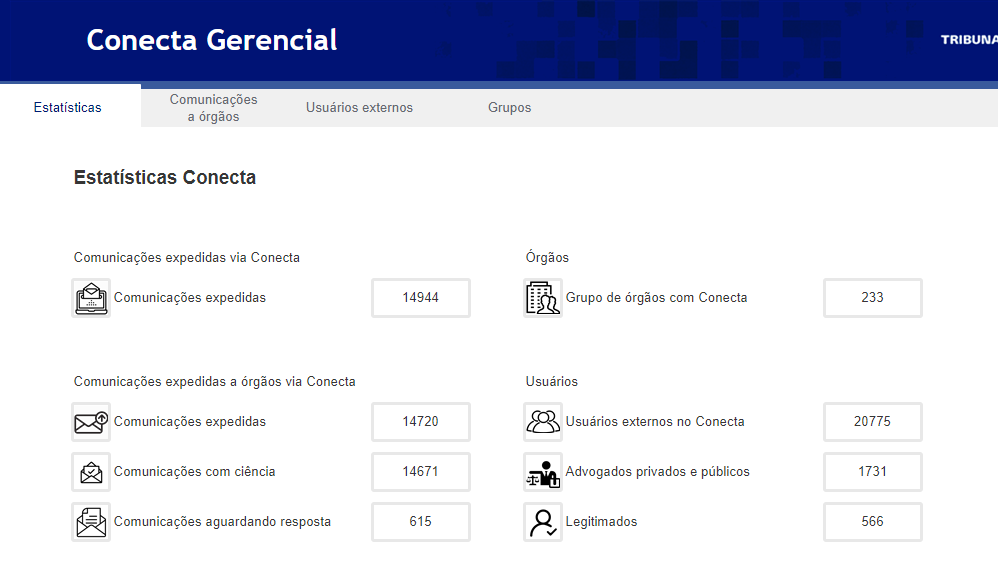
Numbers updated as of 01/11/2021
visual identity
For a system as relevant as CONECTA-TCU, we decided to create an exclusive brand and, for that, we based ourselves on three pillars that motivated the creation of the system: being a communication channel to integrate and bring together the TCU, the citizen, and public agencies.
Thus, we had three main ideas as requirements: communication, integration, and approximation. Generally, the requirements serve as inspiration for the creation of a symbol or logo and, although the levels of abstraction are quite high in this type of project, we managed to create a form with strong pregnancy.
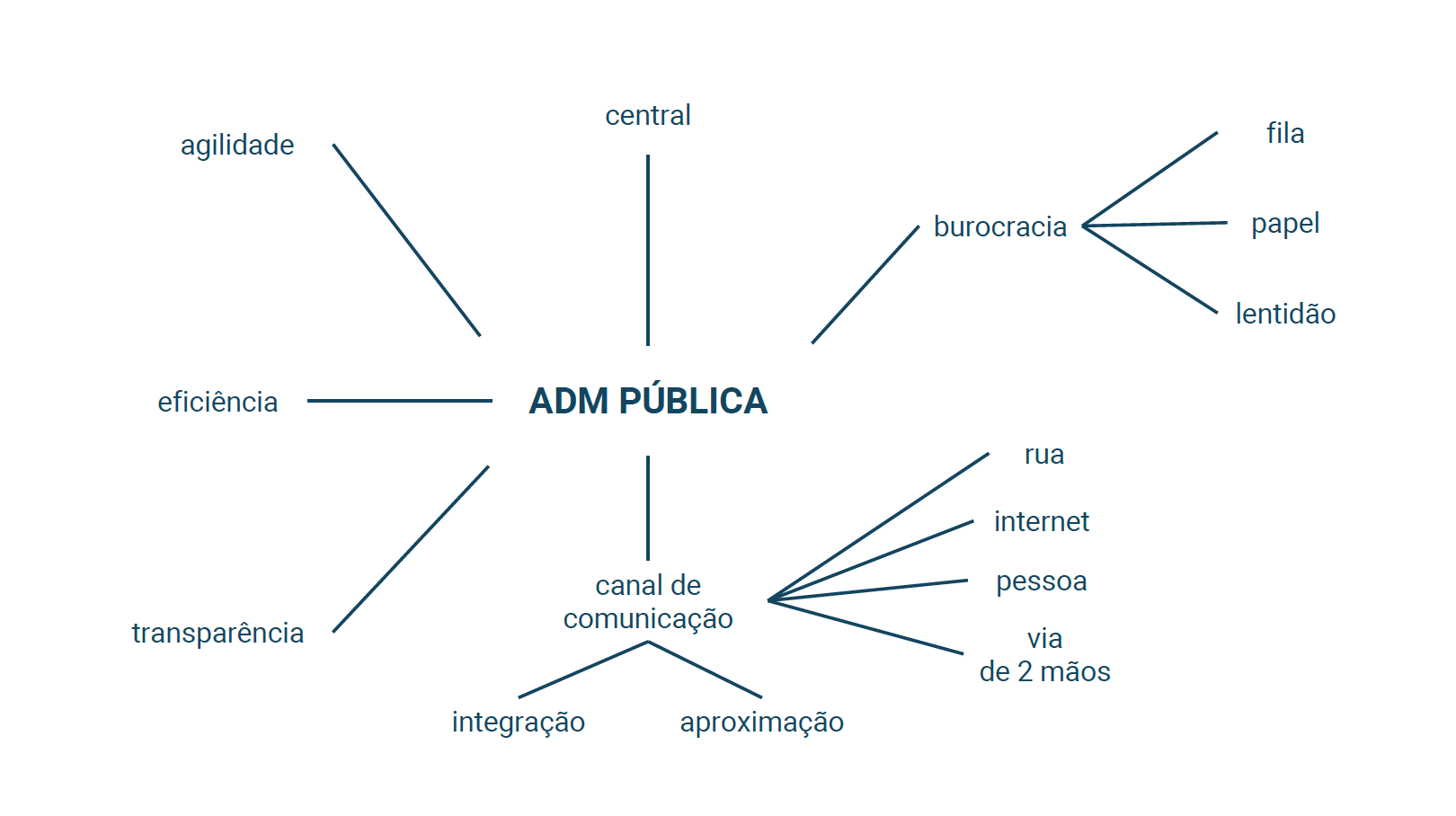
Simplified map made with the POs of the CONECTA-TCU system
CONECTA-TCU Logo - vertical signature
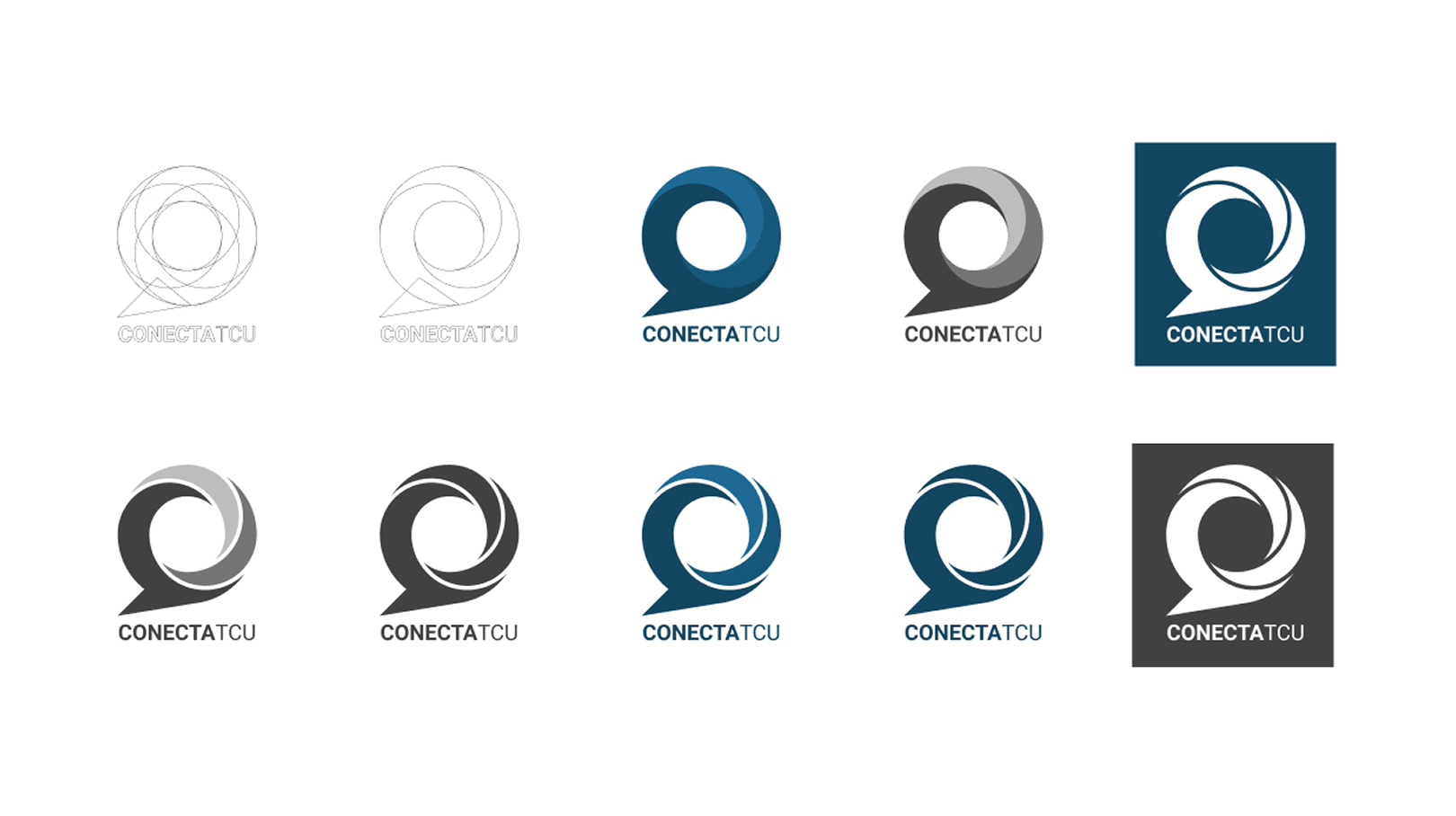
Structure and variations
Horizontal signature
testimonials
"For a system as relevant as CONECTA-TCU, we decided to create an exclusive brand and, for that, we based ourselves on three pillars that motivated the creation of the system: being a communication channel to integrate and bring together the TCU, the citizen, and public agencies."
Federal University of Technology - Paraná (UTFPR) - Tiago Hideki Niwa, Head of Internal Audit
“Conecta provided a greater understanding of the processes and audits related to Eletrobras, in addition to the organization of determinations and rulings."
Eletrobras - Márcia Pinheiro, Manager of the Department of Service to Control Bodies
"The system was a watershed for the AGU... The time to obtain information was extremely shortened... Now, the platform allows automatic access through self-declaration. This improvement was a turning point because today we can worry about the content and no longer about access to the processes."
Attorney General of the Union (AGU) - Rodrigo Paiva, Legal Consultant of the Union in Espírito Santo and former director of the Department of Extrajudicial Affairs
"Before, TCU demands came in different ways and now they are all concentrated in Conecta, which allows for more complete advice to senior offices. The flow of information has become much more objective”,
Ministry of Agriculture, Livestock and Supply (Mapa) - Cláudio Torquato, Head of the Special Advisory for Internal Control
"The platform promoted improved communication between the FNDE and the TCU, making it more practical and efficient."
National Fund for Educational Development (FNDE) - Information Management and Demand Control Division of the Internal Audit
what I learned
It was two long years of hard work, many meetings, research, process facilitation, flows and screens designed, mistakes, and successes. One of the big challenges I had was bringing the team into the world of the user experience process, explaining the importance of each step and its gains, and thus moving towards a UX culture. Particularly, I greatly evolved my repertoire of tools, as working with UX in the public service requires many adaptations, in addition, of course, to all the changes and adaptations that remote work brought.
I believe the most important lesson from a large project like this was that, by having the possibility to work with a multidisciplinary team, I better understood the time and process limitations of people from various areas such as developers, requirements POs, managers, etc. I also understood what types of information I can obtain, what to expect, and what to delegate from and to each of these profiles. Although I was not in a product management position, I had the opportunity to manage the UX Design processes of the CONECTA-TCU system, which were my responsibility, from research to delivery for development.
next steps
With the first deliveries completed, the next ones planned are:
-
Expand the number of accredited agencies and legal representatives with access to CONECTA-TCU;
-
Allow citizens to consult non-confidential information on processes, rulings, and determinations;
-
Creation of the CONECTA-TCU System Design System.
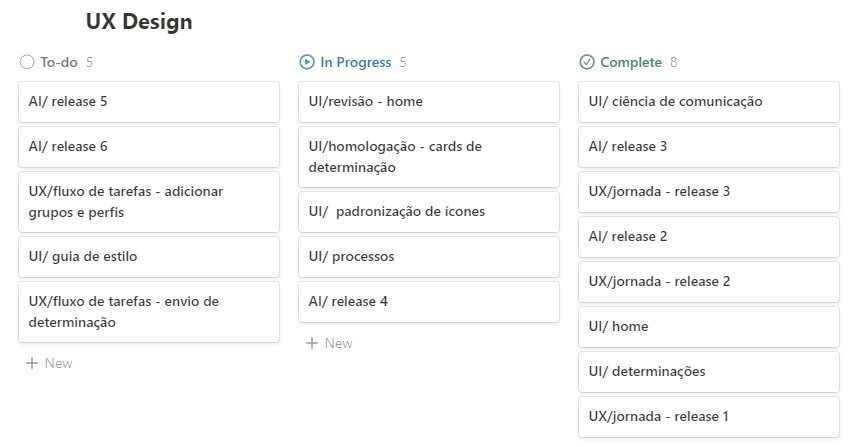
UX/UI Design task board for the CONECTA-TCU system